
Europa Star: Serge Maillard on Publishing, Swiss Watchmaking & Timeless Content

What does it take to lead a family publication into its second century and to build an editorial voice strong enough to outlast every disruption that came before it?
In this in-depth interview, Serge Maillard, Publisher and CEO of Europa Star — one of the most historic voices in watch journalism, founded in Geneva in 1927 by his great-grandfather and celebrating its hundredth anniversary in 2027 — offers a candid look at what it means to steward a family publication through digital disruption, and why watchmaking functions as one of Switzerland's most powerful tools of soft power. Now in its fourth generation of family leadership, Europa Star covers watchmaking, jewelry, and micromechanics across multiple languages and formats, working at the intersection of heritage, craft, and contemporary publishing.
Before joining Europa Star in 2014, Maillard built a wide-ranging career across journalism and international affairs, studying at the Geneva Graduate Institute, the University of Vienna, the London School of Economics, and the University of Neuchâtel, and working across media organisations including AFP, Le Temps, RTS, and LargeNetwork, among others. That cross-disciplinary formation — part diplomat, part journalist, entirely curious about the world — is the lens through which he now reads the watch industry: not merely as a trade, but as a vehicle for culture, identity, and the quiet diplomacy of Swiss craftsmanship.
In this interview, you will learn about Serge Maillard's: account of Europa Star's pivotal moments across a century of watch journalism, from the 1920s expansion to the electronic watch disruption to the mechanical watchmaking renaissance; views on why watchmaking is one of Switzerland's most effective tools of soft power; philosophy of sustainability in publishing, understood as durability — creating content built to be collected, not discarded; approach to editorial decision-making within a family business, and to building a distinct, lasting editorial identity; reflections on the entrepreneurial mindset behind co-founding Reloved, a publication dedicated to the second life of objects; definition of persuasion and the role it plays in an industry built on identity and emotion; and much more.
As always, the conversation concludes with career advice meant to inspire students, early-career professionals, and anyone drawn to journalism, publishing, or the world of watchmaking.
This interview, issue #61 of Persuasive Discourse, is part of The Story Behind series, which goes behind the scenes of the organizations, institutions, and projects shaping business, policy, innovation, and public life in Switzerland and beyond — exploring how they were built, how they work, and what drives the people inside them. To listen to the full conversation on Spotify or YouTube — see links at the end of the article.

I. On Leading a Family Magazine: Europa Star’s History & the Role of a Publisher
Question 1: What is Europa Star?
Answer 1: Europa Star is a watch publication, a historical publication in the field of watchmaking, jewelry, and micromechanics. We have been running this house as a family for almost a century, because my great-grandfather started it in Geneva in 1927. Next year, we will celebrate 100 years.
Question 2: Only a few publications get to celebrate such an honorable anniversary. Are you already planning activities and public events that our readers may take part in?
Answer 2: Yes, absolutely. We want to celebrate watchmaking, not just celebrate ourselves in a way. We have been a witness to the watch industry for one century now, so we want to, in a way, celebrate what we have been writing about for a century. We will organize something big in the center of Geneva, starting during Watches and Wonders, in April 2027, and that will be open to the public.
I cannot say too much about it yet, but I can tell you it will run for a hundred days. It will be open to everyone interested in watchmaking, and I would say it will show how watchmaking has changed over a hundred years, and, in a way, will mirror how society has changed over that time. So yes, a big celebration is coming.
Question 3: You have been Publisher and CEO of Europa Star since 2014. What does a typical day or week look like for you?
Answer 3: There is no real typical day. That is probably an answer you hear a lot, but it is true, because we have a great many so-called activations, events, and meetings in the watch industry, especially being based in Switzerland, where there are hundreds of watch brands and jewelry brands as well. So of course, we have the big events, like Watches and Wonders. I have meetings, a lot of meetings, interviews with watchmakers.
Also, for instance, last year I went to Spain for the Casio Distribution Network Summit, then to the Netherlands to meet a Dutch watchmaker. So, a lot of encounters, because at the end of the day, it is a human industry. We talk a lot about craftsmanship, so we talk a lot about the humans behind the wheels, if you want, and we go and meet all these people.
And as a journalist, that is what I like about this job: much like your podcast, you get to meet a lot of people. For me, the field is much narrower, because it is watchmaking. But in a way, people sometimes ask me, “How can you find something to write about watches after so long?” I say, “But that is endless, actually, because through watchmaking you can write about so many things.” So, at the end of the day, I do not remember what my day looked like, because there were so many different meetings and encounters.
Question 4: Looking back across almost a century of history at Europa Star, what would you say are one or two pivotal moments that helped the magazine grow and become stronger?
Answer 4: First, of course, there was the growth in the ‘20s and ‘30s, which was about connecting the watchmakers in Switzerland with retailers around the world, because the Swiss market was always too small for the Swiss watch industry. Swiss watchmakers always needed to think globally, even back in the ‘20s. That was always the goal, and the growth of the magazine and the publication came from that need. It was a “LinkedIn” of those days, of the ‘30s and ‘40s. That is why we had so many publications in different languages: to connect and to help the business of watchmaking grow. I would say that was the first turning point.
Then another turning point came in the ‘70s, with the rise of the electronic watch, which really disrupted the whole ecosystem of watchmaking. But we were always writing about the industry as a whole. We are not lobbyists for Swiss watchmakers, so we have always had contacts within, and written about, all the technological disruption. In a way, for us, that was also an interesting time.
And then I would say the third turning point is the period we are living in now, which started in the ‘90s: the rebirth of mechanical watchmaking, of craftsmanship, of the watch as a luxury item, of collecting watches, which so many people enjoy doing today. We have seen recently the collaboration between Swatch and Audemars Piguet. There is a fascination for watchmaking today, maybe more than ever. So for us, it is something of a golden age to be writing about watches.
II. On Career Trajectory & Watches as Switzerland’s Soft Power
Question 5: Before joining the family business in 2014, you chose a varied educational path. You studied at the Geneva Graduate Institute, focusing on international relations, then at the University of Vienna, where you also focused on political science and government. Then you pursued communication and media studies at the London School of Economics (LSE), and journalism studies at the University of Neuchâtel, among other programs.
You also held a range of internships and positions: at Agence France-Presse (AFP) in Vienna, at Le Temps in Geneva, at the Institut Suisse in Rome, at the Swiss Federal Department of Foreign Affairs in Strasbourg, at Keystone-SDA (the Swiss news agency) in Bern, at Radio Télévision Suisse (RTS) in Lausanne, at Carrières Internationales in Paris, and LargeNetwork in Geneva, among others.
In hindsight, why do you think you were drawn to this blend of political science and government with media and journalism?
Answer 5: I was drawn to journalism first. I remember, when I was twelve years old, ordering a brochure from my school’s orientation office on how to become a journalist. So that was my ultimate goal, to become a journalist, not necessarily to write about watchmaking. I was more into sports, and into becoming a sports journalist.
But then I grew really fond of international politics and diplomacy, and I wanted to become a diplomat. I thought political science was a great generalist background, because it touches on so many different topics: political economy, global economy, international law, history, and so on. So I wanted to become a diplomat. And then I switched again, and said: okay, I want to become a journalist. That explains why I pursued studies and work experiences in both diplomacy and journalism. I have always been drawn to this global stage, and to looking outside of Switzerland as well.
And in a way, watchmaking today is, for me, the best of both worlds, because the watch industry is a soft power for Switzerland, maybe one of its best soft powers. The most powerful people around the world, the first thing they do in the morning is usually put on a Swiss watch. It is unbelievable, the soft power in this industry. You saw it even during the discussions on tariffs, when a delegation of Swiss businessmen, including from watchmaking, went to meet Donald Trump. There is an aura to watchmaking that is unmatched.
And now, as we have a global publication, it allows us to travel the world through the prism of watchmaking, but also through the prism of Swiss craftsmanship, excellence, the image of Switzerland. I always say there is at least one person in every family around the world with an interest in watches, and there are a lot of families around the world. So that is a lot of potential.
Question 6: I love your idea of watches being one of Switzerland’s soft powers. Since we both studied at the Geneva Graduate Institute, I am curious: did you happen to attend Professor Nye’s keynote speech there, the inventor of the concept of soft power?
Answer 6: I wish I had. But I studied his text, of course, and soft power is a very strong concept. Today it is about reputation, and about the country in itself. I think watchmaking gives a good reputation to Switzerland, but also benefits from Switzerland’s good reputation. If Switzerland had a horrible reputation as a country, or was very divisive, it would be trickier to sell products from this country. So I think it goes hand in hand, and I hope we can somehow still do some kind of diplomacy through the expansion of the Swiss watch industry around the world.
Question 7: Staying with the topic of career development, what were one or two pivotal jobs early on that you think helped shape who you are today?
Answer 7: I usually like to say: create your own job, in a way. Otherwise, you have to apply to a lot of internships, and it is quite complicated, very competitive today. So I started my own media outlet as a student, with a friend, a digital media. It was really at the start of the internet becoming mainstream. We started a digital media in four languages for Swiss students. I learned a lot through that experience. Just like you are doing now with your podcast, I think it is these extra things, going the extra mile, that at the end of the day are also appreciated by employers and by people. So create your first experience, in a way.
And then, I remember, when I was around fifteen, I did an internship at a printer, and it is funny, because I still remember to this day the smell of the printing industry, the inks and so on. I think it gave me a fondness for paper. To this day, we still have this extraordinary thing, paper, which since Gutenberg has been the basis of our civilization, of writing, which is of course today being challenged by AI, by the digital world. But I think, in a way, the digital world can also help the written word, by helping it spread culture. In our case, for instance, we have digitized all our past issues from the ‘20s to the ‘80s, and it has tremendously helped the magazine, because we have something unique that nobody else has: all our initially print-only issues are now also available in one click. The collectors and aficionados in the industry love to scroll back through these eras that saw the rise of the iconic watches.
But I digress. I would say the best thing is to create your own job. And if you have some experience very early on, like I did with the printer, it can create a fondness for something. I always give this example: my brother wanted to become a vet, and when he was around fifteen he did an internship at a veterinarian’s practice. The first day he arrived, they had to perform surgery on a dog, and he fainted at the sight of blood. So he realized that being a vet was maybe not for him. I hope the education system provides these kinds of internship opportunities very early on, because sometimes you have a certain vision of what you want to do, and then reality shows you something else. I see it with my own kids too. They are still young, but that is when the real decisions get made. It is not when you are in your twenties. It is really when you are between twelve and fifteen years old that one starts to define who and what they will become.
III. On Sustainability in the Publishing World & at Europa Star
Question 8: You have taken on several projects beyond Europa Star itself. For example, you co-founded Reloved in 2024 and the World Watch Day in 2025, and you have also served as President of the Foundation Board of the Watch Library since 2021, in addition to the digitization project you just mentioned. Could you describe, for those who do not know, what Reloved is?
Answer 8: Reloved is a joint venture between us and another publisher, my former employer. Before joining Europa Star, I was working with a media agency called Large Network, which is an excellent media agency, especially good in design as well. We started this project as a publication for everything that is pre-loved, or if you will, pre-owned: the secondary market. It is the first publication dedicated to the second life of objects, to how objects can be recycled with beauty and elegance over the years, and items that have several lives. We think a print magazine is perfect for that.
We even came up with a concept where we buy back issues from someone who does not want theirs anymore and resell them. So, in a way, we have a secondary market for the magazine itself. It is a magazine we publish, I would say, once in a while, a concept magazine about everything that has several lives. It goes beyond watchmaking, into the art industry, craft, fashion, cars, anything that can have several lives. It rests on this general idea that we live in a world of a lot of finite products, of planned obsolescence, but we want to give a platform to all these objects that are long-lasting, maybe even longer-lasting than ourselves.
I think, more and more, as we move into an increasingly artificial, fast world, where you have to do everything at the same time, people will admire crafts like mechanical watchmaking, the arts, everything that centers you, in a way, that takes you out of your hamster cage, if you will, so that you can really focus on one single thing. That is a moment of breathing, and I think a magazine today is a bit like that. We see the end of daily paper news, which is moving fast, but for longer content, for contemplation, for reflection, I think a print magazine still has a good future, in correlation with the digital world as well. We are also very active digitally, on LinkedIn and on other social networks. But this is simply a different use. I do not want to oppose digital and print, like so many people do. They serve, in my opinion, different purposes. And Reloved is exactly this slowing-down movement, a moment to contemplate and take the time to make a beautiful product.
Question 9: What is your perception of sustainability from the angle of Europa Star, and how are you trying to incorporate that into the business model?
Answer 9: For me, the core idea of sustainability is durability. It means a product that you will keep for a long time, the opposite of Shein and all the e-commerce platforms, of fast fashion, fast everything. The watch industry itself is moving, in a way, toward a slowing down for your life. So our ultimate dream with Europa Star is that people collect the magazine.
We try to make the magazine in such a way that, first, we target very carefully who we send it to, so we know the people who receive it are people who enjoy it. And second, our ultimate goal is that, just as people collect watches, they can collect Europa Star, because we try to create content in print that does not feel dated. Our philosophy for all our articles is that, in a year or two, you can still read it and it is still relevant, unlike what you find online, which is more newsworthy, more about consuming news and information in the moment, although we also have long-format content online.
So, I would say the mindset behind everything we produce is: collect it, keep it, do not throw it away, come back to it in a few years. We have people all around the world who collect our magazine, some with collections spanning several decades. That is our ultimate goal: to be more like a book than a newspaper.
IV. On the Craft of Publishing & Timeless Content
Question 10: You are both the editor and lead journalist for Europa Star. How do you decide which topics you take on yourself versus which topics other journalists cover for the publication?
Answer 10: That is a very good question, because we like to work with special reports. We might say, for instance: okay, our next issue is about innovation. So we organize and dispatch our articles to several writers on this topic, to cover different angles. Is it innovation in materials? Is it innovation in the movement? Is it innovation in the bracelet, for instance? And then we have something on craftsmanship. We prepare things well ahead of time, so we are ready. I think people read Europa Star also for the special reports, and for reading our interviews with people we do not necessarily see everywhere. So it is a mix, I would say.
As for our team, we are a family business, so we are very much like an artisan in that way, because I work with my uncle. My uncle is the editor-in-chief, and he is well past retirement age, but he is still very passionate about it, and he has been covering the watch industry for over thirty years. That gives us angles that someone arriving today would not necessarily have. It is a different angle, not better or worse, just different. And we try to incorporate new voices. Actually, one of our projects for the hundred years is to develop some kind of mentorship program, to support new writers, and to expand our formats. We also make videos, and we had a podcast, by the way, that we should revive.
But the most difficult thing, at the end of the day, is trying to cover as much as we want to cover, because everywhere I turn, I see different angles. We do not like to follow the agenda the industry offers us. We want to create our own agenda. It does not matter what time of year it is; we will come with our own reports, and they do not need to match the calendar. If there is a fair, we will cover all the new models online, yes. But in the magazine, we will not run something like a special gallery for that fair, because one week after the fair is over, it already looks dated. So you have to keep this long-term goal in mind when you craft the publication.
Question 11: Could you describe your decision-making process a little more? You mentioned your uncle has been with the publication for a long time, so it is a collaboration between the two of you, drawing on his wealth of knowledge. How does one figure out what topic will be interesting long term?
Answer 11: We all have our own specializations, in a way. I know my uncle is very fond of covering the independents, independent watchmakers, people up in the mountains, going close to their atelier to visit them. We have another writer who is very interested in sustainability. We have someone else who is really a specialist and an expert in jewelry and jewelry watches. So you dispatch topics according to specialties. But I think we all also have the ability to write on topics that are not our core interest.
A lot of new writers in the watch industry today were actually collectors first, people who started a blog or a podcast, and then made it their job, in a way. They become journalists. I took a different road, in the sense that I did journalism, or media, on other topics, science, economics, before watchmaking. And then I applied that journalistic expertise to the field of watchmaking.
So sometimes I joke and say: maybe if we had a magazine about football, I would be writing about football, or about the food industry, I would be writing about the food industry, because it is more about finding the angles, in any topic, that are relevant and interesting long term for readers, and that are distinct from other media.
That is why we plan at the start of the year. We know exactly what all the main reports for the year will be. Over the years, I would say, in my case, I work digital-first: I publish online, and then, in a way, we curate the best content for the print side. That is not the case for my uncle, for instance. He still writes very much with print in mind first, and then we publish online. So there is a difference in how we work, but at the end of the day, what matters is that we have a rich editorial dialogue, and a lot of ideas and a desire to cover this and that, to the point that we usually have far too much content to fit inside a print issue.
On average, we do about one hundred and fifty pages per issue, but we could easily do three hundred. I remember, when I studied journalism, one of the mottos was: “it takes long to be short.” There is no greater difficulty than condensing a lot of different ideas into one single short text, because you have to fit the article in a pre-defined physical space. But we very much enjoy having a physical product at the end of the day.
And because we are also a family company, we do not have very rigid ways of working. We are very flexible. For instance, when COVID arrived, of course we had reports already in place that we wanted to run, but we put those on hold, and instead did an issue that worked very well, called Resilience, about how watchmakers found ways to fight through that difficult time, and how history can teach us lessons from previous disruptions, going back even to the Spanish flu in 1918 and how it affected the watch world. We dug into our archives, into previous global disruptions that affected the watch industry. As a journalist, if there is a crisis, there is a topic. If there is a success, there is a topic.
It is important to note that we are not in the business of saying “this is a good watch” or “this is a bad watch.” We are a mirror of what happens, and we offer ways to reflect on what is happening. We do not publish opinion pieces because we are not judges. We inform on what is happening. And a very important point is that we create our own editorial identity. For me, at the end of the day, media outlets are a bit like brands. Each one has its own identity, and the brands that succeed best are the ones with the strongest, most distinct identity, whatever field of activity you are in. So that is a bit our philosophy.
V. On Success Mindset & the Role of Persuasion
Question 12: Since you have created so many different types of projects beyond Europa Star itself, what is the difference, from your experience, between the entrepreneurial mindset needed to create something from scratch and the mindset needed to join and lead a family publication, or a family business?
Answer 12: When I arrived in the family business, it was a pivotal time, because we were a traditional media outlet, and like all traditional media, we experienced the disruption of the digital world. That has probably been, since the invention of printing by Gutenberg, the biggest disruption in the cultural history of humanity in terms of techniques for spreading communication.
So, when I arrived, I saw this disruption, and I saw that we were losing some traction, because everything was moving online. In a way, I saw my role as keeping the heritage, and even digging into it more deeply, because we are an industry that values heritage like no other. But it also meant moving into the digital world: digitizing all these assets, making them available, working hard to renew the design of the publications, and transforming the business, creating new kinds of segments, of partnerships, editorial partnerships with the brands. That was a huge transformation, but undertaken with the means you have when you already have ninety years behind you. You start with a lot of physical and spiritual means, in a way, to carry out that transformation.
But it is also a matter of survival for any company, because it is difficult for a company to last long. At the same time, I do not remember the exact failure rate for startups in their first three years, but I know it is quite high, over fifty percent, I think. So I would say it is even more difficult in some ways, because you have to start, as you say, from scratch, and convince people, without a legacy behind you. In a way, all the projects we founded also rested on the legacy we already had. I do not think you ever really start entirely from scratch. You always have a backstory you can share. And the best asset, when you start something, is yourself. If you embody your startup, your company, you really embrace that identity. You become one with your project, and people think: okay, you are Mr. or Mrs. Company. I think that is essential, doing things with the kind of passion that makes the difference.
So it is, in a way, a different exercise, but of course the biggest one was the transformation of Europa Star itself, because there is also a responsibility to the family. And the more time goes on, the more I see that as an asset, because there is an appreciation for this kind of long-term endeavor, covering all these industries with passion. So that is the mindset we have here.
Question 13: My work centers on researching and analyzing persuasion as it is perceived in different fields. As a publisher and communication expert, how do you define “persuasion”? And does persuasion play a role in your work?
Answer 13: I would like to take the example of the watch industry again, because the price of the components of a watch does not come close, of course, to the price of the watch itself. In this industry, persuasion is huge, because what you buy with a watch today is not a utilitarian object anymore. What you are really buying is the soul, the emotion, the fashion, the intangible assets. Watch brands manage to persuade the leaders of this world of the value of their production. So persuasion, as a tool, is huge, because it helps offer a strong identity. At the end of the day, I think people respond to the identity that the strongest brands provide.
So I would say persuasion, for me, comes from having a strong identity, especially in the publishing world, where there is so much competition, as there are so many media around the world. And the watch industry is a major provider of support for many media, not only specialized media. For example, if you look at generalist media, at their advertisements, how many newspapers around the world could sustain themselves economically without the support of the luxury industry as a whole? So you have to persuade your readers, first and foremost, of your value, your relevance. At the end of the day, we work with our readers in mind, because we want to offer something interesting: a distinct identity toward your readers, because you offer something unique in terms of stories and angles, and a distinct identity toward your partners in this industry, because you have something strong and unique there too.
I think, just like for any brand, or any watch brand, what defines any media, ultimately, and I want to be a little provocative here, is that none of this is really necessary, but all of it is essential, because we touch the human soul with these products. But it is not necessary. You do not ‘need’ these products to live; you ‘need’ them to lead a good life. So, in a way, we mirror that: people gravitate toward the products, the assets, with the strongest identity, the strongest intangible identity. It is about creating some magic around your name, so that when people hear it, they have ‘stars’ in their eyes, or a good, positive image, something attractive.
So I think if you work on your identity, your core identity: what am I known for, what makes me distinct, and you focus on that, ultimately people recognize your role. You always need to persuade, but I would say it is easier if, when you reach out, there is already a good, warm image that comes to mind, than if it is the opposite, of course.
VI. Looking Ahead: Advice for the Next Generation
Question 14: Before the last question, is there any topic you wish to touch upon that we have not had the chance to discuss?
Answer 14: I like the podcast format that you provide. My wife also does a podcast, in the IP (intellectual property) field, and we are moving toward a hundred years now for Europa Star, so I think a lot about formats. What I like about podcasts is, first, that it is a new possibility for any creator to convey their ideas, to share know-how. And second, it is a long format. There are some very good podcasts in the watch world, and we actually had one ourselves that I hope we are going to revive, as I said. I like this format. I thank you for that, because it is a format where you can take more time to dig deeper. But any format has its range: you can have a very short format, or a long format, like video too. I am always fascinated, and probably you are too, by this choice of formats.
We live in a faster world, but by opposition, I think there will be more space again for this old long format, like radio used to have. I think we are coming back to that. I just hope people take the necessary time, though I know that is not always the case for me either. The more productive you try to be, the less time you can devote to single items, unfortunately. But I thank you for this, because the podcast format is something I really, really enjoy.
Who would have thought, to be honest, a few years back, when we thought long-format radio was a thing of the past, that there would be this boom in the podcast world? This is unheard of. History always defies convention and imagination. I find that fascinating.
Question 15: What advice would you share with students and early-career professionals who want to follow in your footsteps?
Answer 15: I would say: if you find, early on, a good way to invest your time, and you focus on one thing and become the best at it, there will always be an opportunity, because today we can create our own tools. For example, if I want to hire a journalist, I do not hire him or her on the résumé alone. Today, we have more female staff than male staff in our company, and the watch world could use more female staff too, but that is another topic.
In terms of advice, I would say: go the extra mile. If you can do a podcast, like we just discussed, go for it. For me, if I see that a person has shown initiative, not just a résumé, that matters. I remember my own first job started as an internship, during my studies, and it eventually became a job. So that is the best advice, in my opinion, though of course there are many possible pieces of advice: do not rely on the résumé alone. It will feel more natural if you have already proven you can create something by your own means.
Today, more than ever, we have so many tools available to help us start something. But I know there is also a lot of competition in the field of content creation, and it is not the easiest endeavor.
Thank you for reading. To listen to the full conversation, access The Persuasive Mindset podcast on Spotify or YouTube.
#Interview #PersuasiveDiscourse #PersuasiveMindset #Podcast #Persuasion #Mindset #TheStoryBehind #EuropaStar #Watchmaking #SwissWatches #WatchIndustry #Switzerland #FamilyBusiness #Publishing #Journalism #Magazine #SoftPower #Sustainability #ContentCreation #Leadership #CareerAdvice #Media #LuxuryIndustry
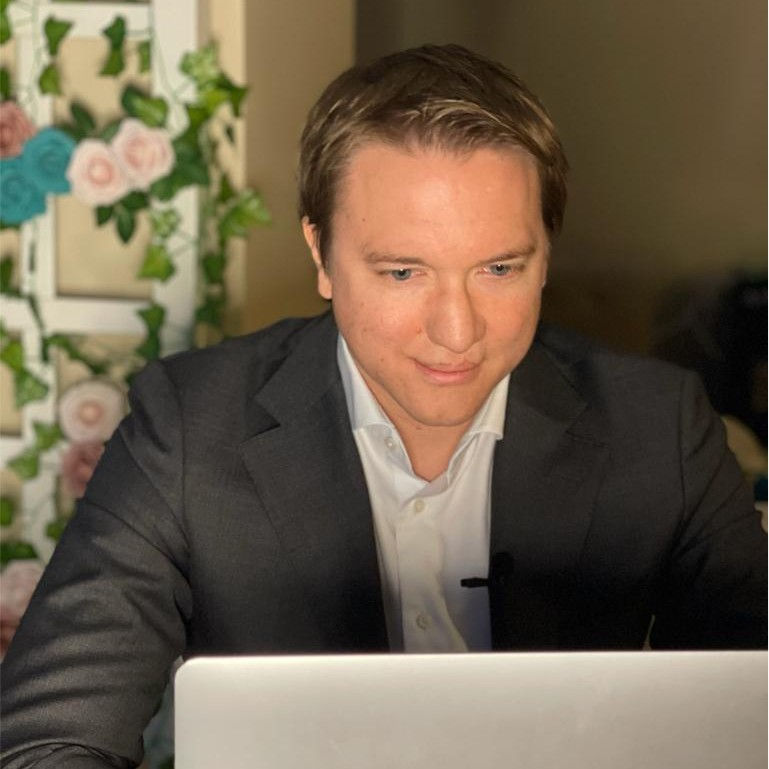
Publisher and CEO of Europa Star Magazine | Switzerland
*Note: This interview was recorded on May 27, 2026, and has been edited for clarity, ease of readability, and length.
**Illustrations: The profile photo shown in this interview is made available on the interviewee’s LinkedIn profile page. The main article photo was taken by the interviewer while attending the panel conversation “What’s Trending in Terms of New Products 2026?” with Serge Maillard, held at the Watches and Wonders conference in Geneva, on April 20, 2026.
If you enjoyed this interview, you may also wish to read:
The Story Behind H. Moser & Cie.: Edouard Meylan on Swiss Watchmaking, Managing a Luxury Brand & Working with Family, Persuasive Discourse, March 27, 2025.
Women in Media: Caroline Vuillemin on Creating Reliable News in Conflict Zones & Running Fondation Hirondelle, Persuasive Discourse, July 15, 2024.
The 10 Writing Rules: Advice from Author Jenn M. Jackson, PhD, Persuasive Discourse, November 23, 2021.
***
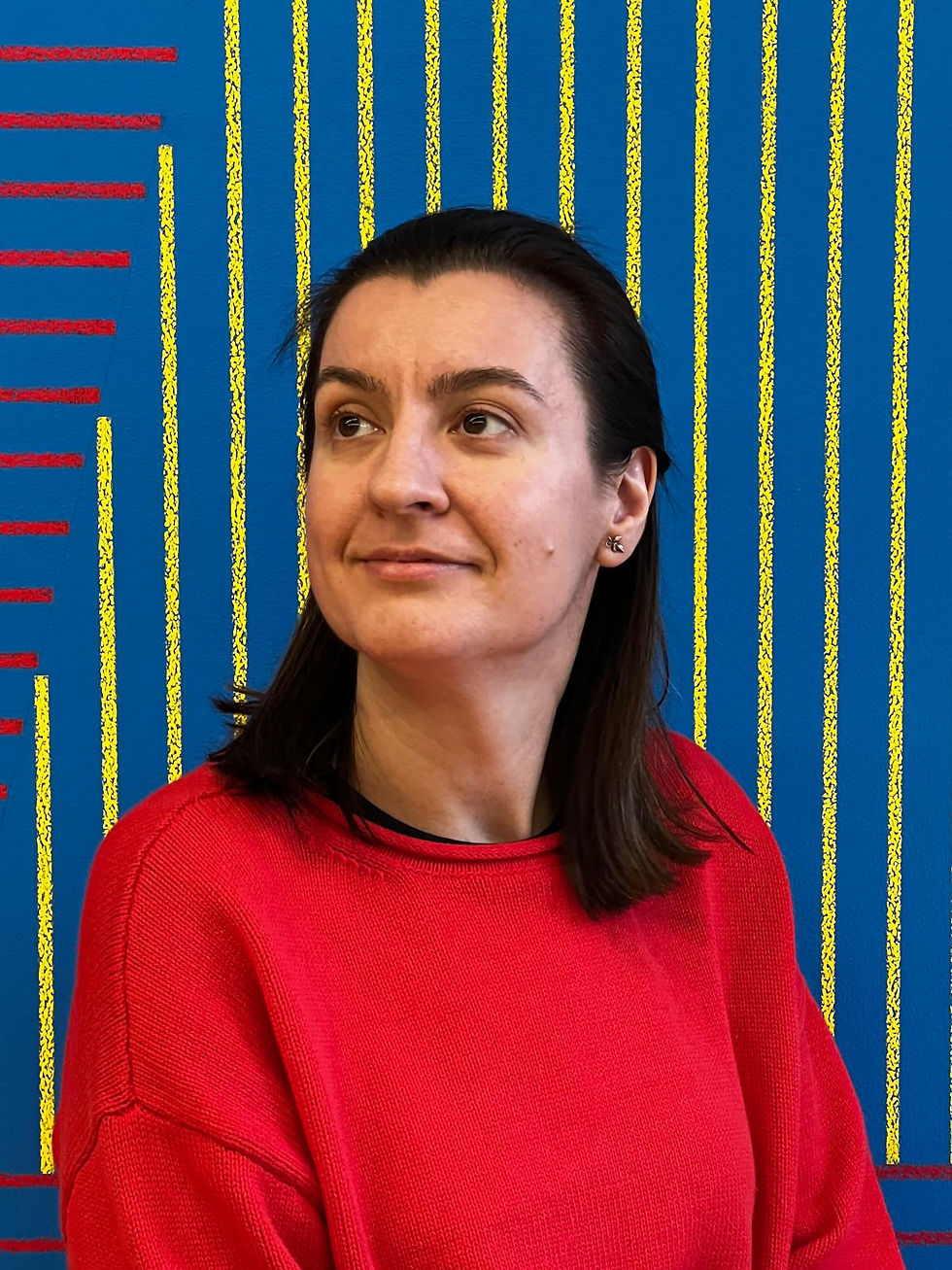
Sorina I. Crisan - Matthey de l'Endroit, PhD is the founder of Persuasive Discourse and the creator and host of The Persuasive Mindset podcast. She holds a PhD in International Relations, with a focus on Communications, from the Graduate Institute of International and Development Studies, Geneva, and lectures at the Lemanic Neuroscience Doctoral School at the University of Geneva and the University of Lausanne. Her work focuses on persuasion, communication, and the intersection of knowledge and public life. Photo credit: Ana Claudia Calabria.


Comments