
iGravity: Patrick Elmer on Impact Investing & the Story Behind Creating a Global Company

What does it take to combine the discipline and effectiveness of the private sector with the values of development cooperation, and to persuade investors to back local businesses in emerging markets?
In this in-depth interview, Patrick Elmer, Founder and CEO of iGravity, explains how impact investing, which aims to generate both financial return and social and environmental impact, allows iGravity to build a bridge between businesses that generate impact in emerging markets and the investors and funders seeking both financial and impact returns. iGravity is a regulated impact investment management and advisory firm that integrates advisory services with investment management. It works through a team of about 35 professionals across hubs in Zurich, Milano, Nairobi, Kampala, and Bogotá, with about 70 percent of its staff based in emerging markets.
Before founding iGravity, Elmer worked with NGOs, banks, development organizations, microfinance institutions, and asset managers, and held positions at SECO, Credit Suisse, and BlueOrchard. His studies in international affairs at the University of St. Gallen and a master’s in development cooperation at ETH Zurich led to field experience in Mozambique and later Tanzania and Madagascar, where he spent about four years working and living. That experience across finance and development, he explains, prompted him to ask why private-sector discipline and development cooperation could not be combined, and to find the answer in impact investing.
He describes iGravity as an enabler that provides financing and capacity building, a model very different from the development aid of a few decades ago, in which countries in the North had the money and told countries in the South what to do. Today, he says, there is a strong empowerment that comes along, and a bridge between people in the North and the South that is mutually beneficial, because each learns from the other.
In this interview, you will learn about Elmer’s definition of impact investing, from intentionality and measurability to additionality, and how impact is measured in practice. You will discover examples of iGravity’s work in education, healthcare, agriculture, and refugee contexts. You will also read about iGravity’s founding story, from choosing its name to growing from a one-person firm into a global team; Elmer’s view of persuasion as more of an art than a science, one that starts with trust, needs inspiration, and rests on real data; the strategy iGravity has developed for investors who want impact with a solid and stable return in emerging markets; and much more.
As always, the conversation concludes with personal and career advice meant to inspire students, early-career professionals, and anyone interested in the fields of impact investing, development finance, and entrepreneurship.
This interview, issue #62 of Persuasive Discourse, is part of The Story Behind and Finance Leaders series. To listen to the full audio conversation, click on episode 21 of The Persuasive Mindset on Spotify [coming soon].

I. iGravity: Mission & Business Model
Question 1: As we start the conversation, can you please describe your current work and role as the founder and CEO of iGravity?
Answer 1: At iGravity, our focus is on impact investment, which means investments into local businesses and funds that generate social and environmental impact, as well as financial return for the investors.
At the heart of our work is a simple but ambitious idea that finance can and should be an enabler for a more equitable and sustainable world. We believe in a financial system that integrates impact considerations alongside financial return. Businesses and local entrepreneurs in emerging markets are very often a powerful engine for wealth creation and for inclusion, because they generate jobs, create income-generating opportunities, and increase access to essential goods and services.
Yet they are severely underfunded, because traditional financial institutions overlook them or are not comfortable with that risk profile. And that is exactly where iGravity comes in: to build a bridge between the businesses that generate impact in emerging markets and the investors and funders who are seeking both financial and impact returns.
Question 2: iGravity is a licensed portfolio manager. Could you please explain what that means?
Answer 2: We are a FINMA-regulated impact investment management and advisory firm. When you manage money and mobilize capital from third parties, you need to be regulated and supervised. This gives investors the confidence that you, as a company, know what to do with their money, and that you follow a number of sound principles when you allocate it. So, that is exactly iGravity’s role.
We have a unique model because we integrate what we call advisory services with investment management to support our partners, end to end. To clarify, you have to imagine, from the onset, when somebody wonders: “What can my organization do in impact investment?” We come in and support with strategy advice, scoping and feasibility studies, all the way up to the design of new financial mechanisms and/or impact management and measurement systems. We look into how to actually measure the impact generated, then into structuring impact investment facilities, often so-called blended finance facilities, where at the same time you have philanthropic funders and commercial investors coming in, and finally into managing the investment side.
With the help of our people on the ground, because most of our staff is based in emerging markets, we seek to work with companies that fulfill our investment criteria. We assess them. We do a so-called due diligence, where we look at their financials and at their impact profile. We speak with the management, their employees, with some of their suppliers, and even with their clients, in order to come up with an informed view and a recommendation on whether or not to invest in this company.
And, again, we are absolutely convinced that for the journey towards sustainable development to be successful, we need both sides of the equation. We need philanthropic partners, foundations, and government development agencies, as well as commercial institutional investors. They are very different types of organizations. They have different values and objectives, but they all come with a lot of resources, capabilities, specific knowledge, and networks on the ground. And I think that all of them are equally needed for this journey.
Question 3: In terms of the business setup, do clients find iGravity, or do you find them?
Answer 3: I always say that business development is one of the hardest things to do, because you need to invest a lot of time in it. It is almost like building a pipeline, as a biotech company does. You need a pipeline of many different leads, and some will move, while others will not, on both the investor as well as SME side. Eventually the ones you believe will move do not, and vice versa.
In our work there is, first of all, a lot of awareness raising and education about what impact investing is. Some people are familiar with it, but many are not. So, we spend considerable time explaining the basic concepts behind what it means, how it works, and how it can actually relate to a person or an organization.
And then out of that, in some cases, it becomes a so-called business opportunity where we realize that the counterpart is interested and seeking to get involved in this field, and where our expertise and knowledge can come in handy. We develop relationships, and eventually some of these interactions lead to new clients for iGravity.
II. Impact Investing: Definition, Measurement & Working with iGravity
Question 4: You just mentioned that you help educate people about impact investing. In a nutshell, what is impact investing?
Answer 4: Impact investments are, very simply, investments into funds, organizations, or enterprises with the intention to generate both a financial return and a social and environmental impact.
That is the official definition, and there are a couple of elements, or features, that need to be in place. The first one is intentionality. From the perspective of the investor, there needs to be the intention to create impact. But also, when you look at the company, the business, or the fund you want to invest in, there needs to be intentionality at that level, meaning that what they do through their operations or activities is related to the generation of impact.
Then there is the notion of measurability. You need to be able to measure the impact with KPIs (key performance indicators) and track it over time.
Then there is the notion of additionality. That is, with the new money coming in, you need to generate either more or better impact. In practice, that means increasing either the quantity or the quality of social outcomes.
And finally, it needs to be related to the Sustainable Development Goals framework.
These are the basic elements required to qualify as an impact investment. But obviously, when you start assessing investment opportunities, you go much deeper and follow a catalog of questions, starting with: Who is the beneficiary? What kind of outcomes or impact is generated? How much? What is the depth, scale, or contribution? What if this investment does not happen? What is the counterfactual? You also end by considering potential risk, because obviously whenever you do something, there is always a risk that things can go wrong and not turn out as you envisaged.
So it is a very sophisticated and detailed process, which starts with the minimum criteria I just mentioned and then you can go further in assessing impact.
Question 5: Social impact seems difficult to measure. You mentioned KPIs. Can you give some examples of the indicators you would typically measure? And what is a typical timeframe during which you need to measure them before you can say, at the end of an impact investing project, that it has achieved its mission?
Answer 5: That is a great question. It depends very much on the type of business or activities and on the context. What is measured is often outputs, and in some cases outcomes.
For example, when we work with an education company, we would try to measure the number of additional students who have access to certain educational content, and then you can break it down further: How many are female or male? How many are from underprivileged communities? And you could even go a step further to also assess the extent to which it helps pupils improve numeracy or literacy skills.
We also work with a number of healthcare facilities in Kenya, where we would track the increased number of patients they will serve over time as a result of our financing. We are especially interested in understanding: How many of the new patients are from low-income as opposed to middle-income households?
Or we invested in an agricultural company in Northern Uganda that works with smallholder farmers, selling agricultural inputs and equipment, combined with training, to those who live on very small plots of land. In that case, it happens that there are many refugees in the area. So part of the financing was meant to support the company to work deeper in the settlements and serve more refugee clients. We are measuring the percentage of refugee clients they have as they scale the business.
Question 6: For clients who come to you wanting to create a project that is good for society and meets your criteria, how do you conceive of working with them? And what is the minimum timeframe they need to commit to in order to create this social good product with you?
Answer 6: We have several investment products and solutions on the shelf, which are open to new investors and partners to join. For example, we manage investment facilities in the educational, refugee, and agricultural space. Usually, the recommended timeframe is at least three years, and ideally four or five.
Having said that, when working with larger institutions on a B2B (business-to-business) basis, they often come with very specific views of what they want and need. In those cases, we co-develop something very tailored to their needs, which can be linked to a specific region, country, sector, or type of company. Some partners prefer to support the incubation or acceleration of startup companies. Others want to work more with small and medium-sized companies. Others are seeking more technology-enabled companies, because they can scale faster. So, depending on many of these criteria, we design bottom-up investment strategies for them.
III. Founding & Growing iGravity: The Name, Going Global & Partnerships
Question 7: Thinking of the entrepreneurial mindset needed to create iGravity, and reflecting on when you initially started the company, why did you choose the name iGravity?
Answer 7: iGravity stands for impact gravity. When I started, I was looking for a name, and this can be quite a painful process, a bit like when you get a child and you need to find a name that is going to stick with them for a very long time.
I noticed that in the impact investment space, there were many different actors working, often, on their own, without really combining their efforts. At the onset, my vision was to create a sort of platform, or center of gravitation, where different people with ideas and organizations with capital and expertise could come together and jointly work on some of the big problems. So impact gravity was the concept I had in mind: attracting people and organizations towards us.
Question 8: Staying with the idea of an entrepreneurial mindset, when you started iGravity, was it just you, or did you have a partner?
Answer 8: I started alone, without a big plan, to be honest. I felt the need to do something, and I wanted to be an entrepreneur.
What happened was that two organizations I knew came to me because they were seeking advice on how to develop and build an impact investment fund. So I took that chance to step out of my previous job, set up a company, and start from the beginning with two clients that would pay for my work.
Question 9: iGravity started in Zurich, and now it has a global presence. From the outside, it looks like it grew organically from a one-person show to a large enterprise. How do you feel, in hindsight, about the choice you made to enlarge the company?
Answer 9: At some point, I had to ask myself whether I wanted to be a one-person show or a larger team, and especially a larger brand, that would not necessarily depend only on me. I think both are valid options, with pros and cons.
I decided to go for the latter and create a company, a brand. And now we are a team of about 35 professionals operating out of our hubs in Zurich, Milano, Nairobi, Kampala, and Bogotá. About 70 percent of our staff is based in emerging markets. That makes a lot of sense, because our work is centered around supporting local businesses. So you need to be close to them. Nothing else makes sense.
Question 10: What does that mean in practice? For example, what is the focus of the Zurich office?
Answer 10: In the Zurich office, there are especially the people who joined in the first round, and most of our executive management team. There is a lot of relationship building and management that is done from here. And in Europe there is also the business development function, because obviously the money is here, in Switzerland and in Europe, even though we are trying more and more to mobilize local capital as well. This is because there is quite a bit of money also in emerging markets and in Africa, with local pension funds and banks.
What we are really eager to do is mobilize local financing, local capital, for local problems. And obviously one of the beauties of impact investment is that you rely on the local leaders, who have their own ideas because they have grown up in their communities, and they know best what is needed.
We are more of an enabler, providing the financing and capacity building, which is very different from the traditional development aid model of a few decades ago, where countries in the North would have the money and would tell the countries in the South what they needed to do.
Today there is a strong empowerment that comes along, and I think it is also another bridge we build between the people in the North and the people in the South, which is mutually beneficial, because we learn from them and they learn from us. It is not always easy, but it is super exciting.
Question 11: On the iGravity website, once you click on, for example, the Refugee Investment Facility (RIF), a new website opens. I would like to better understand your work: does the concept start with you, and then each project takes on its own life and becomes its own entity, or how does it work?
Answer 11: In the case of the Refugee Investment Facility, we developed a partnership with the Danish Refugee Council (DRC). In other cases, we have a partnership with, for example, HEKS/EPER and the Somaha Foundation around Balim.
It is a partnership where, at the start, we define a specific problem we want to solve, and we develop a concept, an approach. That is the way we did it for the RIF, where we wanted to bring financing to displacement contexts. I did not know at that time that refugee crises last, on average, 20 years or more. So these are people who settle down for a very long time, and naturally they develop entrepreneurial activities and seek access to the same goods and services we have. There is a lot of dynamic entrepreneurship developing, but there is no financing. Everything is grant-based in displacement contexts. So we wanted to bring in investment capital that could support local businesses, to empower refugees and host communities by creating employment, but also income-generating opportunities.
We went on the ground to meet some of these businesses and understand what exactly they need. Do they need debt financing? Do they need equity capital? What kind of interest rates can they pay? What else do they need beyond the financing? What kind of capital assistance?
After that, we designed, bottom-up, an investment facility, which today is called the RIF, the Refugee Investment Facility. We went fundraising together with our partner, the DRC. We decided to do a pilot because this was something completely new, and we were not sure it would actually work. Now we are very excited, because we are just finalizing our pilot with a portfolio of about 10 companies and 5 million invested.
We work with a mechanism that is quite unique, called impact-linked finance. We provide loans to some of these companies, which are all medium-sized companies registered in their countries. The terms and conditions of the loans are linked to specific impact KPIs or outcomes. So we sit down with the companies, and we try to understand what is actually relevant for them. How can we help and incentivize them to generate more impact? And if they are successful over time, the cost of the loan is lowered.
IV. Career Trajectory: Education, Work Experience &
the Value of Working in Emerging Markets
Question 12: Your online profile shows that you initially worked in development finance and microfinance in Africa, at SECO (Swiss State Secretariat for Economic Affairs), for example, and then at Credit Suisse and BlueOrchard, before founding iGravity. In retrospect, what were some of the pivotal career transitions that you believe have given you a lot of value and helped shape your trajectory?
Answer 12: In retrospect, everything I did makes a lot of sense, because it is kind of a puzzle coming together.
I have worked with NGOs, big banks, development organizations, microfinance institutions, and asset managers. I can tell you that throughout my career there were many moments where I felt lost and unhappy, not knowing exactly what I should do. To be honest, I have always loved traveling and meeting people, and I think that gave me the sensitivity that something is wrong with our world, and we need to do something.
I was fascinated by the private sector and the financial sector, because I always felt there is a lot of innovation and they are very effective. But mostly they do not center around the right things to do. At the same time, I was very interested in development cooperation. So I tried to apply for all these jobs at the World Bank, at the UN, and so on, because I saw that they were fixing the real problems, but I also learned that in some cases they are maybe not the most efficient or the most effective. So I came to the conclusion: why can we not combine the two sides, the discipline and the effectiveness of the private sector with the values of development cooperation?
But when I started, 20 years ago or more now, there was no such thing as impact investing. So I worked in the private sector, which was super interesting, but I was missing something. Then I worked on the development side, and again I learned a lot, but there was something missing, until everything came together with impact investing. And here I am today.
Question 13: What is your educational background?
Answer 13: I studied international affairs because I was mostly interested in understanding how the world is structured and organized.
I went to the University of St. Gallen because it had a great combination of economics, international law, and political affairs. I would say I got a relatively generalist education, and I think it was good. I always advise people to study what they are most interested in. You will always be able to have a career in whatever you want, but do not necessarily choose your studies just because of the job you will get out of them.
Then I did a master’s at ETH in Zurich called NADEL, which is a master’s in development cooperation. It also allowed me to move to Mozambique and get field experience, which is crucial in this space.
Question 14: Was the Mozambique work contract a direct result of the master’s, or was it an internship?
Answer 14: It was a combination. The master's at ETH is very specific: it happens every two years, it is a small, interdisciplinary group, and it combines a semester of classroom with six to twelve months of on-site work assignment. It is a bit like an internship, but one that can grow into a job.
Question 15: Which other countries did you work in?
Answer 15: My first experience was volunteering in Nicaragua when I was 20, working in a primary school in the slums of Managua, which was an amazing experience for me. Then I worked in Mozambique, Tanzania, and Madagascar, mostly. I was based there, and I spent about four years working and living in these countries, which was also a great experience.
Question 16: Do you also speak multiple languages?
Answer 16: That is correct. It certainly helps when you want to connect and relate to people. It is easier when you speak their language. It gives you much more proximity to them.
V. Success Mindset, Role Models & Persuasion in Impact Investing
Question 17: Speaking of relating to other people and understanding their mindset, what do you think your entrepreneurial mindset was? How did you learn to start something from scratch?
Answer 17: I think I still learn every day, to be honest. You never stop learning.
I think it is probably a combination of courage and just jumping in. And then, certainly, not overthinking everything, because especially at the beginning there are many things that maybe do not make too much sense, but if you believe it is going to work, you just go for it without challenging every single aspect.
I am also grateful, obviously, for all the people and organizations I have met along the way, from colleagues who have joined me and now work here at iGravity, to clients and partners. You also need to be a bit lucky to meet the right people at the right time. You can certainly influence that, but there is also an element of randomness to it. But I think it was just the wish to do something meaningful with my life and to try, at least partially, to change some of the imbalances we have.
Question 18: Speaking of inspiration and the people who positively impact our lives, do you have a role model?
Answer 18: Not specifically one person, but along my career journey I have worked with and met outstanding leaders and personalities, and I have taken something from them at every moment.
I think especially when you are young, it is important to work with people you admire and from whom you can actually learn, whether content-wise, personality-wise, or in terms of working style. It is kind of like you have your own bag, and you fill it up, and you learn something from every interaction.
Question 19: As you know, my work also centers on the topic of persuasion, and I ask everybody I speak with: what is your perception and definition of persuasion, in your field?
Answer 19: We have to do a lot of persuasion in our work, because we want to convince investors, especially, to deploy their money towards emerging markets, often towards Africa in particular, to generate both financial returns and social impact. This is something that makes people uncomfortable, because it is unknown to them.
I think persuasion is probably more of an art than a science. I would say it starts with trust. There needs to be a trust base, or a trust relationship. There needs to be some element of inspiration, because you need to inspire the counterpart. And obviously this needs to be grounded in objective data and context.
So, I think it is a combination of trust, inspiration, and analytical capability, or assessment of something which is real. You are not just making something up and inspiring people. What you want to inspire people about is based on real facts. What do you think?
Question 20: I agree, and I believe what you said is also linked to Aristotle’s ethos, logos, and pathos, an almost 2,300-year-old philosophy. It is fantastic to me how true it remains today, because we still care about the credibility of the source, the inspiration, and the emotion that the information we hear makes us feel. Because you excel at facilitating collaborations and partnerships, do you have advice for junior professionals who want to inspire this spirit of collaboration in others?
Answer 20: I think the reality is that everybody sits in a specific place and is representing something or someone. You need to acknowledge and understand that.
For example, if I am negotiating with you, I have my ideas and beliefs, but it does not make sense for me to impose them on you. I think I need first to understand where you are coming from: who you are, what ideas and values you have, and who you represent. Based on that, I can then develop a strategy where my beliefs and ideas can meet yours. In some cases, it is easier, while in other cases it is difficult or even impossible. But you need to have this ability to really put yourself in the shoes of the counterparty.
VI. Upcoming Projects & Advice for the Next Generation
Question 21: Where can readers learn more about your work?
Answer 21: Obviously, we have a wonderful website, and we are on LinkedIn, where we post quite a bit. I think these are probably the best places to find us. We also have separate websites for our investment facilities and our different mandates.
Question 22: What is a project or upcoming development that you are excited about right now?
Answer 22: I am excited about most of the things we do.
We have invested a lot in financial engineering and innovation, creating the structures that can attract the money and then support businesses. I think we are now really at a point of inflection where we want and need to scale our work.
We have exciting initiatives in the space of education, where we work a lot with outcome-based payments. We just had an event in Colombia where we built the portfolio of a couple of organizations. Education is certainly something of utmost importance.
Then there is the refugee work. We now have 10 investments across Uganda, Kenya, Jordan, and Colombia, and we want to scale that in Africa, the Middle East, and Latin America. Or Balim Investments, which supports mid-sized agriculture companies in Africa with loans and technical assistance. This is a hard nut to crack, because it is hardly profitable. So, we really need to bring in different parties, funders, and investors.
I could go on forever. We have many more projects, but maybe I will stop here.
Question 23: Is there a topic you would like to touch upon that we have not yet addressed?
Answer 23: Maybe one thing I wanted to mention is that investing in emerging markets to generate impact is something most investors are afraid of.
Based on our experience, we have developed a specific strategy for investors: to build portfolios of local investment funds and local managers, relying also on local expertise to have well-diversified portfolios. From an institutional investor’s perspective, you want a solid and stable return with impact. So, I am convinced the best approach is to go through a diversified fund portfolio.
If you are more of an impact-oriented organization and you have very specific impact KPIs in mind, it might be easier to have a specific theory of change and then lend directly to some of the businesses that contribute to solving some of the problems. That is a much more direct relationship and impact, but obviously also a higher risk profile.
So, there are these two different ways of doing it, depending on what your ultimate goals are.
Question 24: For readers who are inspired by your work, what advice would you share with those who want to follow in your footsteps?
Answer 24: It is difficult to give one piece of advice. I think that you should follow your heart and do what you want to do. Do not question that too much. Be prepared that this is going to be a journey. You are not going to find your dream job immediately but just keep going. Keep your north star, what you want to do. And then every station, every post, will bring you something. It will equip you for whatever you will want to do.
If you want to work in impact investing, what is really game-changing is to go on the ground and gain experience working in an emerging market or country, whether through volunteering or a paid job. I think there is nothing that compares to on-site experience, because you get to connect with the people and the communities, and understand the context in which they operate.
Thank you for reading. To listen to the full conversation, access The Persuasive Mindset podcast on Spotify.
#Interview #PersuasiveDiscourse #PersuasiveMindset #Podcast #Persuasion #Mindset #FinanceLeaders #TheStoryBehind #iGravity #Switzerland #Finance #Impact #CareerAdvice

Founder & CEO of iGravity | Switzerland
*Note: This interview was recorded on May 4, 2026, and has been edited for clarity, ease of readability, and length.
**Illustrations: The profile photo shown in this interview is made available on the iGravity website. The main article photo was taken by the author on February 27, 2026, during the session, "Reality check Switzerland: Is the Swiss humanitarian aid ready for tomorrow?," part of the 5th edition of the International Cooperation Forum (IC Forum), which took place at the Geneva International Conference Centre (CICG) in Geneva, Switzerland.
If you enjoyed this interview, you may also wish to read:
Bridging Finance and Global Policy: Diana Zamora on Corporate Diplomacy, Private Sector, and Social Impact at Mastercard, PersuasiveDiscourse.com, October 1, 2025.
Aligning Principle with Profit: Dr. Dorothée Baumann-Pauly on Business, Human Rights & Ethical Leadership, PersuasiveDiscourse.com, August 21, 2025.
Women in Finance: Beatriz Sanchez describes her work in the finance industry & shares advice on how to build a purpose-driven career, PersuasiveDiscourse.com, May 1, 2025.
***
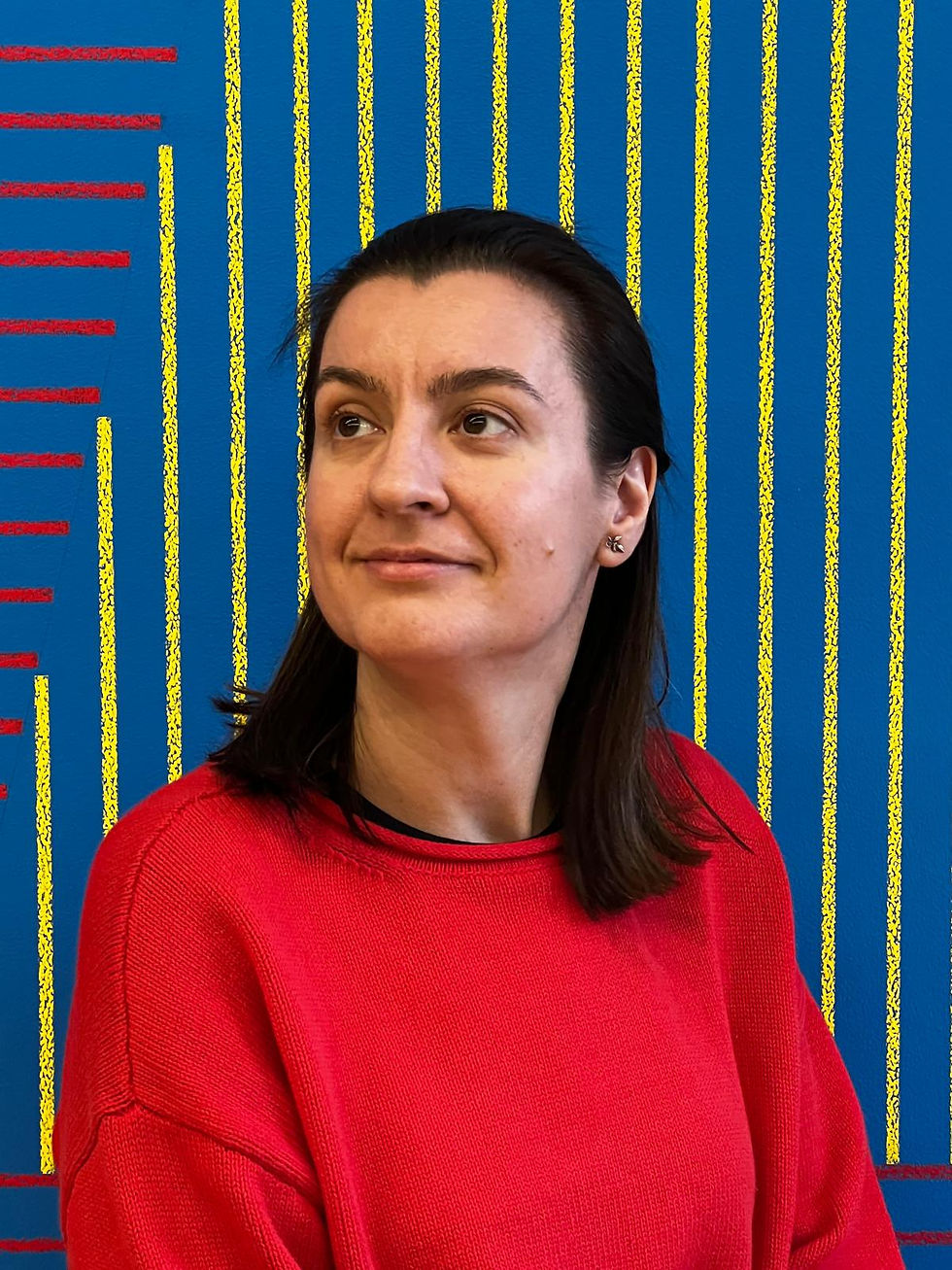
Sorina I. Crisan - Matthey de l'Endroit, PhD is the founder of Persuasive Discourse and the creator and host of The Persuasive Mindset podcast. She holds a PhD in International Relations, with a focus on Communications, from the Graduate Institute of International and Development Studies, Geneva, and lectures at the Lemanic Neuroscience Doctoral School at the University of Geneva and the University of Lausanne. Her work focuses on persuasion, communication, and the intersection of knowledge and public life. Photo credits: Ana Claudia Calabria.


Comments